Sam Siatta was deep in a tequila haze, so staggeringly drunk that he would later say he retained no memory of the crime he was beginning
to commit.
It was a few minutes after 2 a.m. on April 13, 2014. Siatta had just forced his way into a single-story home in Normal, Ill., a college town on the prairie about 130 miles southwest of Chicago. A Marine Corps veteran of the war in Afghanistan, he was a 24-year-old freshman studying on the G.I. Bill at the university nearby, Illinois State. He had a record of valor in infantry combat and no criminal past. He also had no clear reason to have entered someone else’s home, no motive that prosecutors would be able to point to at trial — no intention to rob, no indication that he knew or had even seen before any of the three young female teaching students who lived inside, or the boyfriends who were with two of them.
Two of the women and one of the men had awakened minutes earlier when they thought they heard someone opening and closing the front door. It had been an unnerving sensation, the feeling that an intruder had stepped into the home. They tried to settle themselves and return to bed, only to be jolted by a house-shaking bang — the sound of Siatta hitting the back door with such force that he splintered the jamb.
The door swung open into a dining area. Siatta strode into the unfamiliar space, just around the block from the similarly sized home where he rented a room. A little more than six feet tall and weighing about 175 pounds, he was a thoroughly trained veteran of a small-unit ground war and heavily tattooed, with red tally marks on his sternum indicating seven Taliban kills from 2009 and 2010. His former company commander would later tell a trial judge that of the 388 troops he led in Afghanistan, Siatta was the man the militants feared most.
The women cowered behind a flimsy bedroom door. One of them dialed 911. Another clutched a stubby kitchen knife.
Since leaving the corps in 2012, Siatta had been unable to switch off the habits of war. He was hypervigilant and struggled to relax. He watched people, sizing them up and scanning for threats. In the varying situations of everyday life, he constantly repositioned himself so no one got behind him. Much of this was appropriate for combat patrols. Some of it drew from his training. All of it was mentally and emotionally exhausting, unsuited for a peaceful life. Going to a restaurant, moving through knots of people at a party, visiting the mall, finding a seat in a classroom relative to other people and windows and doors — each was a challenge requiring effort and will.
Siatta had been in a deepening funk for months. For more than four years he had been stalked by memories of civilians his platoon had killed, people whose lives had abruptly ended for a reason as unforgiving as it was simple — being in the wrong place when the shooting began. The Department of Veterans Affairs would later say he suffered from depression, alcohol dependency and PTSD. But until this moment, he had adapted with behaviors allowing him to pass as less troubled than he was. He avoided crowds. He drank prodigious amounts of alcohol to dim his heightened alertness and to muffle his sorrows. He socialized rarely, often only with his mother or brother.
The dining area Siatta had entered gave way to a little kitchen, which opened into a small living room. In that adjoining room, perhaps 25 feet from Siatta, stood one of the boyfriends, another young former Marine. In any number of situations, the two men might have become friends. But they had served in different places and jobs in the corps, and the man in the living room had no idea he had anything in common with the man in the kitchen. He positioned himself between his girlfriend and the shattered door.
typeface: Georgia, serif
font size: 1.1rem
leading: 1.8rem (line-height)
tracking: 0.02em
column width: 60% (max-width: 650px)
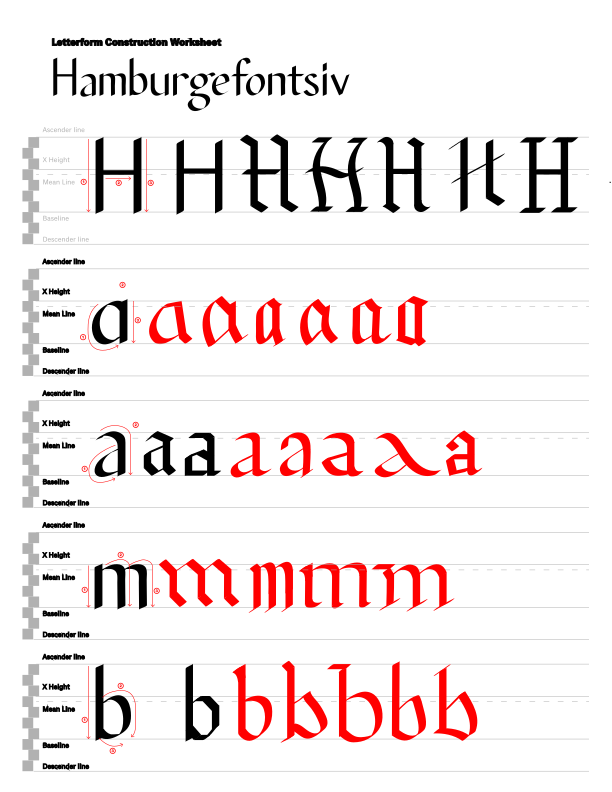
For this project, I focused on experimenting with letterforms in Adobe Illustrator and deepening my understanding of typography through structured repetition. From the beginning, I understood that my professor designed this assignment to encourage us, as students, to explore how letters naturally take shape, emphasizing experimentation and refinement. The primary goal was to create multiple variations of the same letter to develop a more natural and polished style.
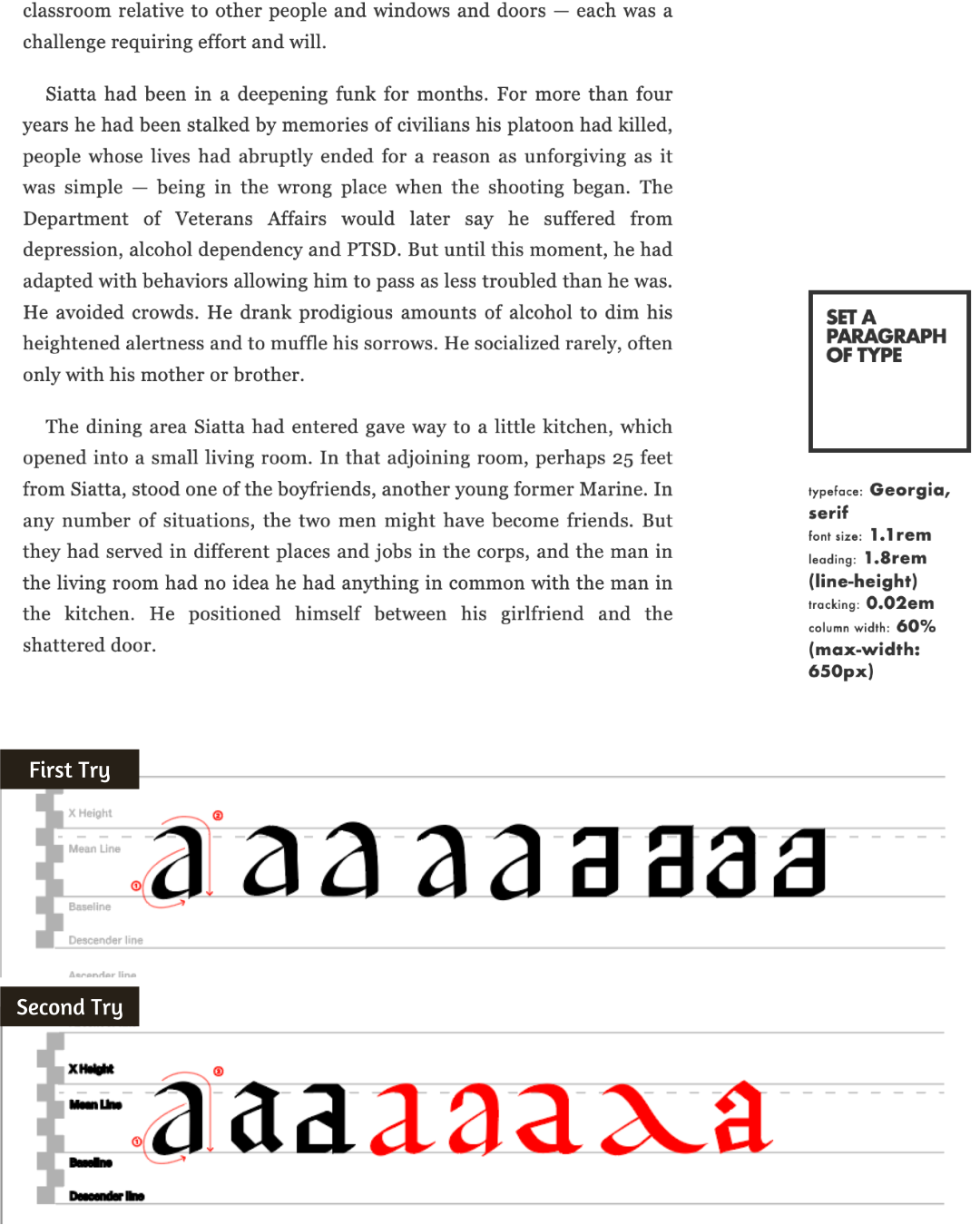
I primarily worked with gothic lettering, using a slightly slanted, flat pen that allowed me to create strokes with varying thicknesses—thin in some areas and thick in others. This contrast added depth and dimension to my letters. Instead of immediately jumping between different letters, I dedicated a significant amount of time to each one. For example, I repeated the letter “a” 20-30 times before moving on to another letter. This repetition helped my hand adapt to the structure and motion, making my strokes more precise and fluid.
Throughout the process, I evaluated my progress by comparing multiple pages of letterforms. I examined each letter carefully, ensuring the lines were clean, consistent, and polished before deciding on a final version. Since I kept the same pen size throughout, I focused more on refining stroke angles, spacing, and connections rather than adjusting thickness. After finishing the initial sketches, I polished the vector paths, fine-tuning the curves and angles to improve overall consistency.
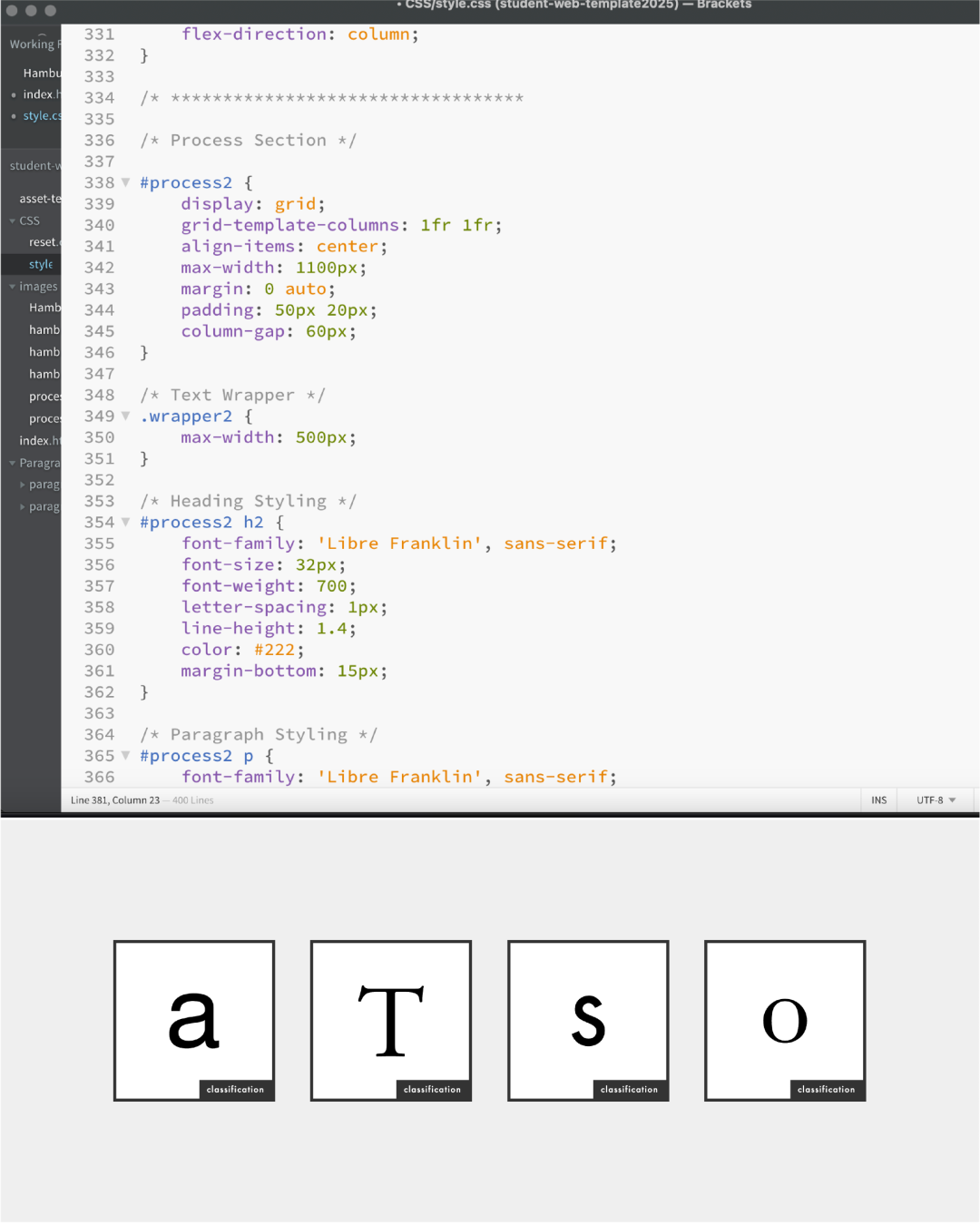
The website portion of this project was based on a pre-existing template provided by my professor. Students were expected to edit the paragraph structure to meet proper typography and design standards. Additionally, we had to analyze four assigned letterforms and explain their classification. While the layout and interactivity were already built into the template, I focused on ensuring the typography and text formatting met professional readability standards.
One of the biggest challenges I faced was coding the process section, particularly arranging images next to the text. I wanted my process explanation to be both visually engaging and easy to read. This required some problem-solving to properly align elements so that the text and image complemented each other without making the layout feel cluttered.
Another challenge was handling hover text for the four letterform classifications. The template required an explanation for each letter, but I realized that my text was too long to fit neatly in the hover effect. To fix this, I researched solutions and found a method to add a scrolling feature to the hover box. This allowed me to include all necessary information while maintaining a clean and organized display. I learned this technique by watching YouTube tutorials, which helped me quickly resolve the issue.
Creating letterforms digitally was more challenging than expected, especially since I used my laptop’s trackpad instead of a stylus or drawing tablet. Initially, I found it difficult to control my strokes, and the letters felt uneven. However, as I kept repeating the same letter, my movements became more fluid and precise. This repetition helped me train my hand to naturally adjust to the digital medium, resulting in cleaner and more consistent letterforms.
On the coding side, I didn’t face major difficulties since the template was already structured with most of the necessary components. However, this experience helped me understand how to refine paragraph arrangements to improve readability, spacing, and typography hierarchy.
This project significantly improved my ability to analyze, create, and refine letterforms. I learned how to recognize different type classifications, understand their defining features, and apply this knowledge when creating my own designs.
Additionally, working with the pre-built template helped me develop a better grasp of how to structure and format text for optimal readability in web design. The experience of problem-solving small layout issues—such as adding a scroll feature and adjusting paragraph structure—gave me more confidence in handling code adjustments for future projects.
In future work, I plan to build on these skills by experimenting with other historical lettering styles, improving my ability to digitally illustrate letters, and continuing to refine how I organize text in digital layouts for better typography and user experience.